


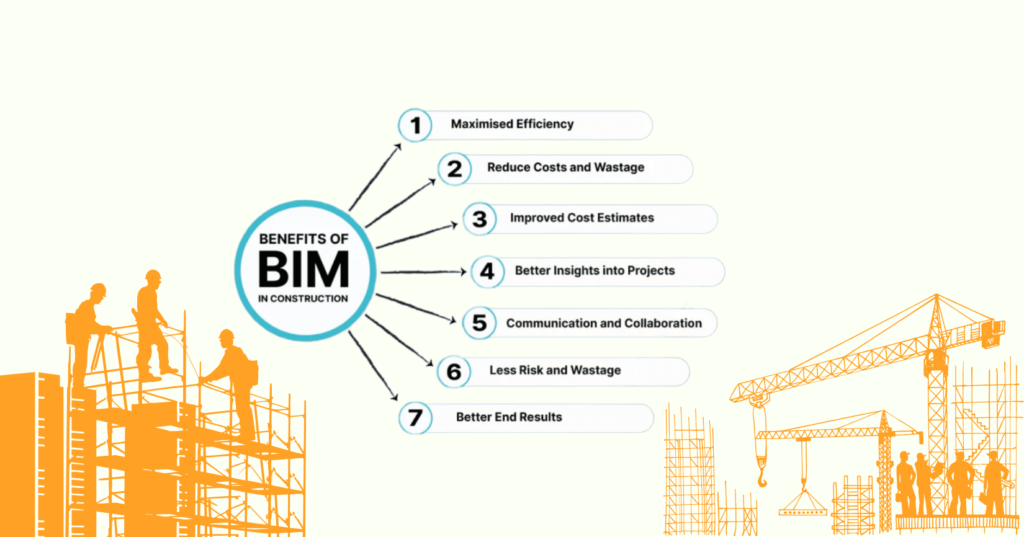
Budgets force choices. When numbers are vague or inconsistent, every person spends time protecting them in preference to using them. In modern building tasks — tighter schedules, complicated structures, and skinny margins — the cost of a wrong assumption multiplies quickly. That’s why improving the accuracy of price estimates isn’t an academic workout; it’s practical threat management. A better estimate helps teams identify materials, schedule work, and manage cash flow without frantic course corrections.
One of the clearest methods to tighten estimates is to change the inputs. Replace fuzzy, manually derived counts with measurable numbers that come at once from the layout. When portions are tied to the real model geometry, estimators can prevent guessing and begin studying.
Build the model so that it actually helps estimate
Not every 3D model is useful for cost work. To support estimation, a BIM Model must be more than pretty visuals. It should be structured as a dataset: named components, clear units, and minimal but useful attributes like material, finish, and thickness. That structure lets software and people extract repeatable quantities without constant cleanup.
When teams invest a little time in modeling discipline, they get big returns:
- Takeoffs are far faster and far less error-prone.
- Different trades read the same numbers, reducing disputes.
- Design options can be priced quickly, which speeds decisions.
A clean model makes repeatable estimating possible. That repeatability is what delivers accuracy.
Practical steps to extract reliable quantities
Extracting quantities is both a technical and a process challenge. It’s technical because models must export usable data; it’s process-driven because teams need shared rules.
Do this first:
- Agree on naming conventions and required attributes at kickoff.
- Export sample datasets (CSV or IFC) and validate one sample takeoff.
- Automate routine counts where possible, but keep a human check.
- Document any exceptions—curved cladding, tapered slabs, and so on—so estimators know what to expect.
These small upfront steps remove a huge amount of clerical work and free estimators to focus on judgment.
Where estimating adds essential reality checks
A model gives counts. Converting those counts into a buildable price requires human context. That’s the day-to-day job of Construction Estimating Companies — taking measured quantities and applying local productivity, phasing, and procurement logic. Estimators know when a duct run in an open warehouse will flow quickly and when the same run in a retrofit will cost two or three times as much because of access constraints.
This human overlay is crucial. With precise counts in hand, estimators test scenarios, allocate crew resources, and assign realistic lead times. The outcome: an estimate that reflects how work is actually delivered, not how it looks on a drawing.
Clash detection: save money by finding problems early
One of the loudest, costliest surprises on site is the discovery that two systems occupy the same space. Mechanical clashes with structure, or electrical runs blocking required clearances, force demolition, redesign, and schedule loss. Coordinated models reveal these clashes in the office, where fixes are cheap.
Regular clash checks, short coordination meetings, and a workflow for resolving clashes reduce field rework dramatically. The model becomes a sandbox for solutions: try a new routing, test clearances, and see the cost implications before any material is ordered.
Use data to support procurement decisions
When quantities come from the model, procurement becomes far more accurate. Fabricators get validated lengths and cut lists. Suppliers receive precise counts instead of padded estimates. This reduces returns, minimizes rush orders, and lowers storage needs on site.
Better procurement flows directly from the model into the supply chain, and that flow reduces both waste and friction.
Structured formats for formal, auditable estimates
Some projects call for a structured, traceable estimate — insurers, public owners, and lenders often demand it. In those cases, mapping model-derived quantities into standardized estimating frameworks makes audit and review straightforward. Xactimate Estimating Services and similar platforms provide that standardized line-item structure, and when model quantities feed into these formats, the resulting output is transparent and defensible.
Structured reporting also helps when disputes arise. With a clear chain from model element to cost line, everyone can see how numbers were formed.
Combining model accuracy with pricing agility
One big benefit of model-driven estimating is speed. When a design tweak occurs, change the model and update the quantities. That lets estimators run quick re-prices and offer owners meaningful cost comparisons rather than vague ranges. Fast, defensible options help teams avoid last-minute, expensive decisions.
Also, this agility matters in competitive bidding. Firms that can produce accurate, model-based takeoffs and deliver them quickly often win work without eroding margins.
Practical governance for consistent results
Consistency beats heroics. Small governance measures deliver steady accuracy:
- A concise modeling guide at project start.
- Version-controlled mapping between model components and cost codes.
- Regular syncs between modelers and estimators during active design.
- A checklist for exporters to validate units and attributes.
These measures are low-cost and high-impact. Over time, the organization’s estimating accuracy improves and variance narrows.
Real outcomes teams notice quickly
When a team adopts model-first estimating, changes are visible within a few cycles:
- Shorter estimating cycles.
- Lower variance between bid and final cost.
- Fewer emergency shipments and less waste.
- Improved client confidence in budgets.
Those operational improvements are what make model-driven estimating worth the effort.
Final thought: models + people = dependable budgets
A version doesn’t update Revel in. What it does is make revel in more effectively. BIM Modeling Services create the dependent statistics; Construction Estimating Services translate that information into executable plans; and, where formal, auditable reporting is needed, structures like Xactimate Estimating Services add readability and defensibility. The final results are not perfection — no challenge can promise that — but a measurable discount in luxurious surprises and a clearer course from design to delivery.
FAQs
- At what stage should modeling begin to aid estimating?
Start as early as schematic design. Even rough, measurable geometry helps surface cost drivers before decisions are locked. - How often should estimates be refreshed from the model?
Refresh at major design milestones and whenever a significant revision occurs. For active design phases, a short weekly or biweekly re-check keeps numbers current. - Do I need special software to extract quantities from a model?
Not necessarily. Exports in common formats (IFC, CSV) work for many workflows. Specialized tools speed extraction and mapping, but smart governance and clean modeling are the real keys to reliable quantities.


